
Learn how bolt tensioning improves bolt preload accuracy and supports reliable industrial flange connections.
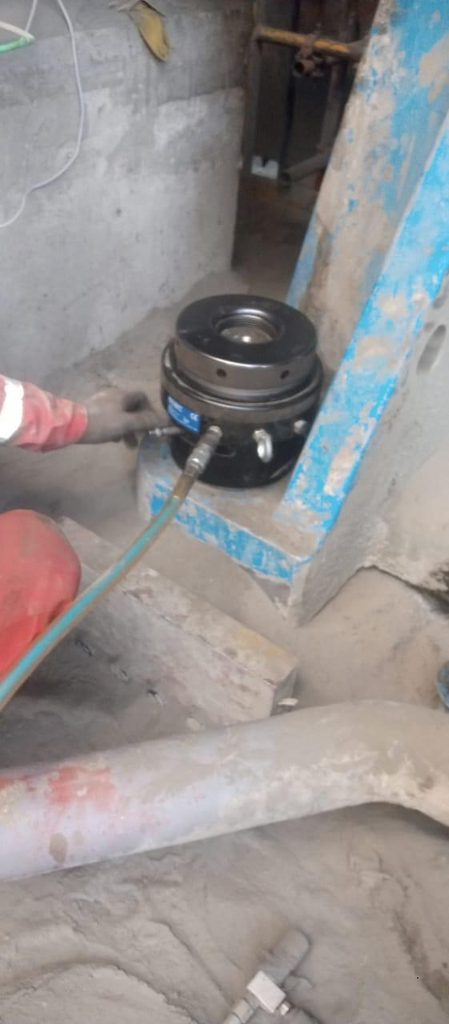
Bolt tensioning is a fastening method used to apply a controlled tensile force to bolts and studs. The process stretches the fastener using specialized equipment, allowing the nut to be tightened before the hydraulic load is released.
This technique helps achieve the required bolt preload and is widely used in industrial applications where connection reliability is critical.
The process generally involves four steps:
1- Installing the hydraulic tensioner over the stud bolt.
2- Applying hydraulic pressure to stretch the bolt.
3- Tightening the nut while the bolt is elongated.
4- Releasing hydraulic pressure to transfer the load into the joint.
Correct equipment selection and pressure-to-load calculations are essential for achieving the specified result.
Bolt tensioning offers several advantages:
– More controlled bolt preload.
– Reduced dependence on friction during load application.
– Improved load consistency across multiple fasteners.
– Reduced risk of uneven flange loading.
– Effective tightening of large industrial studs.
Common applications include pressure vessels, heat exchangers, pipelines, turbines, and industrial flange connections.
The method is particularly useful when accurate bolt loading is required and suitable access is available.
A successful tensioning operation requires trained personnel, suitable hydraulic equipment, and a documented procedure based on the joint specifications.
TRITIGHT can help you evaluate your industrial bolt tensioning requirements and identify a suitable solution.
You can contact us directly through our website form or email us at karmen.safwat@tritight.com.
A technical representative will respond within 24 hours to discuss your requirements and prepare a detailed proposal.
Bolt Tensioning Services | TRITIGHT
Learn how bolt tensioning improves bolt preload accuracy and supports reliable industrial flange connections.