
Discover how controlled bolting improves bolt load accuracy, joint integrity, and safety in industrial applications.
Controlled bolting is essential for achieving accurate and reliable bolted connections in industrial environments. It helps ensure that fasteners receive the required preload while reducing the risk of uneven tightening, leakage, and joint failure.
Industries such as oil and gas, petrochemical, and power generation depend on controlled bolting to maintain equipment reliability and operational safety.
Incorrect bolt tightening can result in gasket damage, flange leakage, excessive bolt stress, and costly equipment downtime.
A professional controlled bolting procedure helps achieve:
– Accurate and consistent bolt loading.
– Better flange joint integrity.
– Reduced risk of leakage.
– Improved equipment reliability.
– Safer industrial maintenance operations.
Depending on the application, controlled bolting can involve hydraulic torque wrenches, hydraulic bolt tensioners, or calibrated manual torque tools.
The appropriate method depends on bolt dimensions, joint design, material properties, and engineering specifications.
Proper equipment selection and an approved tightening procedure are essential for reliable results. Each bolted connection should be evaluated to determine the correct tightening method and required bolt load.
TRITIGHT supports industrial bolting requirements with a focus on precision, reliability, and joint integrity.
Contact TRITIGHT to discuss your controlled bolting requirements.
You can contact us directly through our website form or email us at karmen.safwat@tritight.com.
A technical representative will respond within 24 hours to discuss your requirements and prepare a detailed proposal.
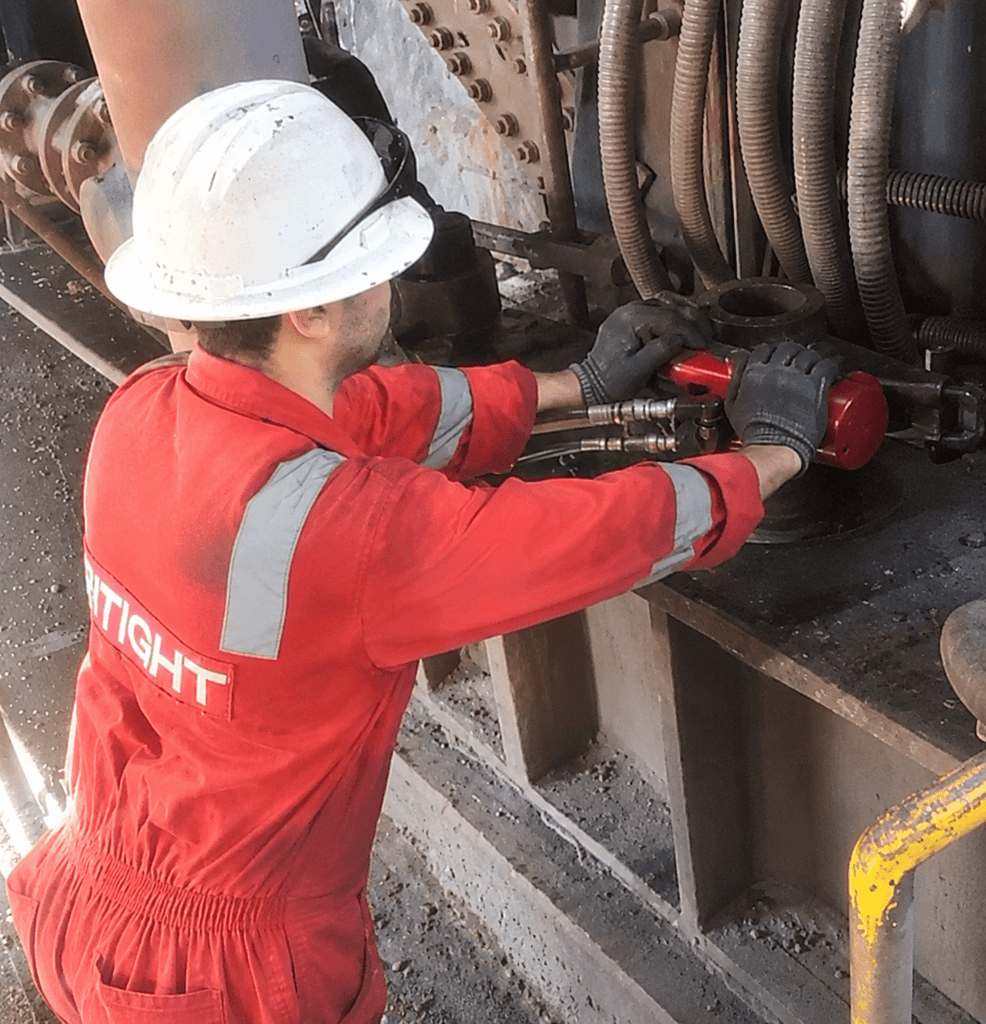
Controlled Bolting Services | TRITIGHT
Discover how controlled bolting improves bolt load accuracy, joint integrity, and safety in industrial applications.